A New Threat Emerges in Cybersecurity
Security researchers have uncovered a dangerous new phishing technique where attackers are using virtual hard drives (VHDs) to deliver remote access trojans (RATs). This sophisticated method bypasses traditional email security measures, making it particularly dangerous for businesses and individuals alike.
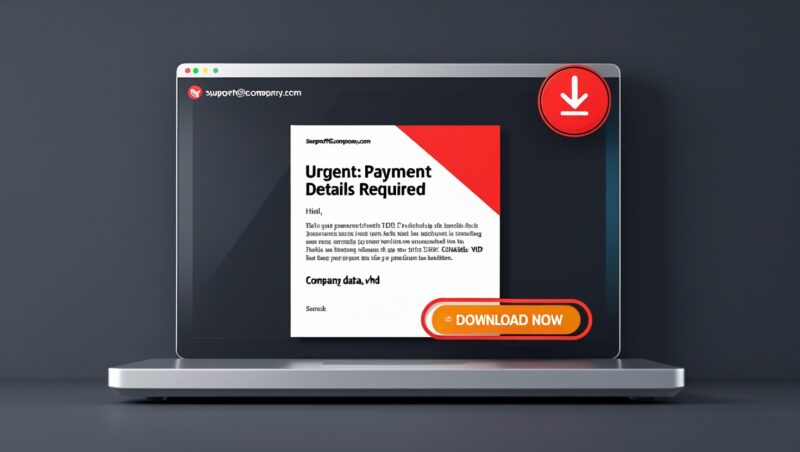
How the Attack Works
- The Initial Contact: Victims receive seemingly legitimate emails containing VHD file attachments
- The Deception: These files appear as harmless virtual disk images (commonly used for legitimate purposes)
- The Payload: When mounted, the VHD delivers malicious scripts that install RATs like AsyncRAT or DarkComet
- The Damage: Attackers gain complete remote control of infected systems
Why This Attack Method is Effective
- Bypasses Security: Many email filters don’t scan VHD files as thoroughly as EXEs or ZIPs
- Appears Legitimate: VHDs are commonly used in IT environments, making them seem safe
- Delivers Powerful Malware: RATs give attackers full system access for data theft, espionage, or ransomware deployment
Recent Attack Examples
- A campaign targeting financial institutions in North America
- Attacks on healthcare organizations in Europe
- Phishing attempts against SMBs across multiple sectors
Protection Measures for Your Business
- Employee Training: Educate staff about this new threat vector
- Email Filtering: Implement advanced attachment scanning for VHD files
- Access Controls: Restrict who can mount virtual drives in your organization
- Endpoint Protection: Use next-gen antivirus with behavior monitoring
- Backup Strategy: Maintain secure, offline backups of critical data
The Growing Threat Landscape
This attack method represents just one of many evolving cyber threats. With remote work expanding attack surfaces, businesses must remain vigilant against increasingly sophisticated social engineering tactics.
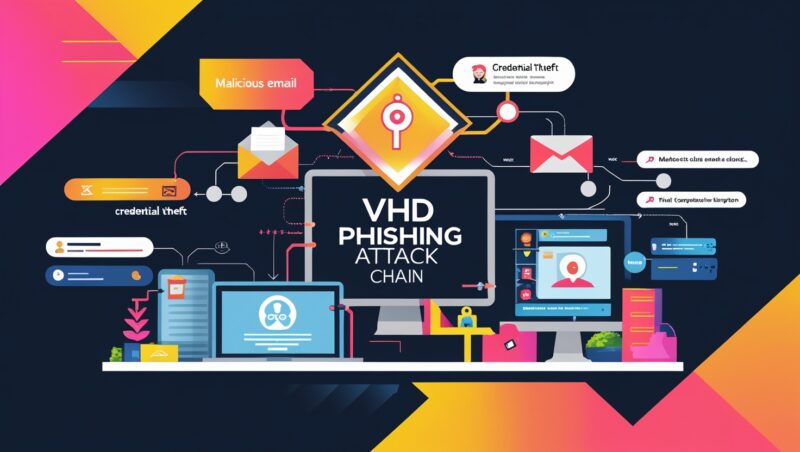
Key Takeaways:
Cybercriminals are weaponizing VHD files in phishing attacks
️ RATs delivered through this method give attackers full system control
Email filters often miss these malicious virtual drive attachments
️ Multi-layered security is essential for protection
FAQ:
1. What is a VHD file?
A Virtual Hard Disk file is typically used for virtual machine storage, but attackers are now abusing this format.
2. Why are VHDs dangerous in phishing?
They often bypass email security scans and appear legitimate to users.
3. What can a RAT do to my system?
Remote Access Trojans give attackers complete control, including:
- Data theft
- Keylogging
- Camera/mic access
- Additional malware installation
4. How can I spot these malicious emails?
Look for:
- Unexpected VHD attachments
- Urgent or threatening language
- Slight email address misspellings
5. What should I do if I suspect an attack?
Immediately:
- Disconnect from the network
- Contact your IT security team
- Scan systems with updated antivirus
Worried about these new phishing threats? Our cybersecurity experts can help protect your business with:
- Advanced email filtering
- Employee security training
- Endpoint protection solutions
Contact us today for a free security assessment.